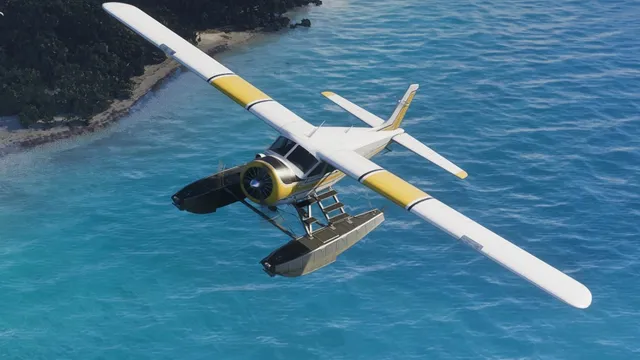
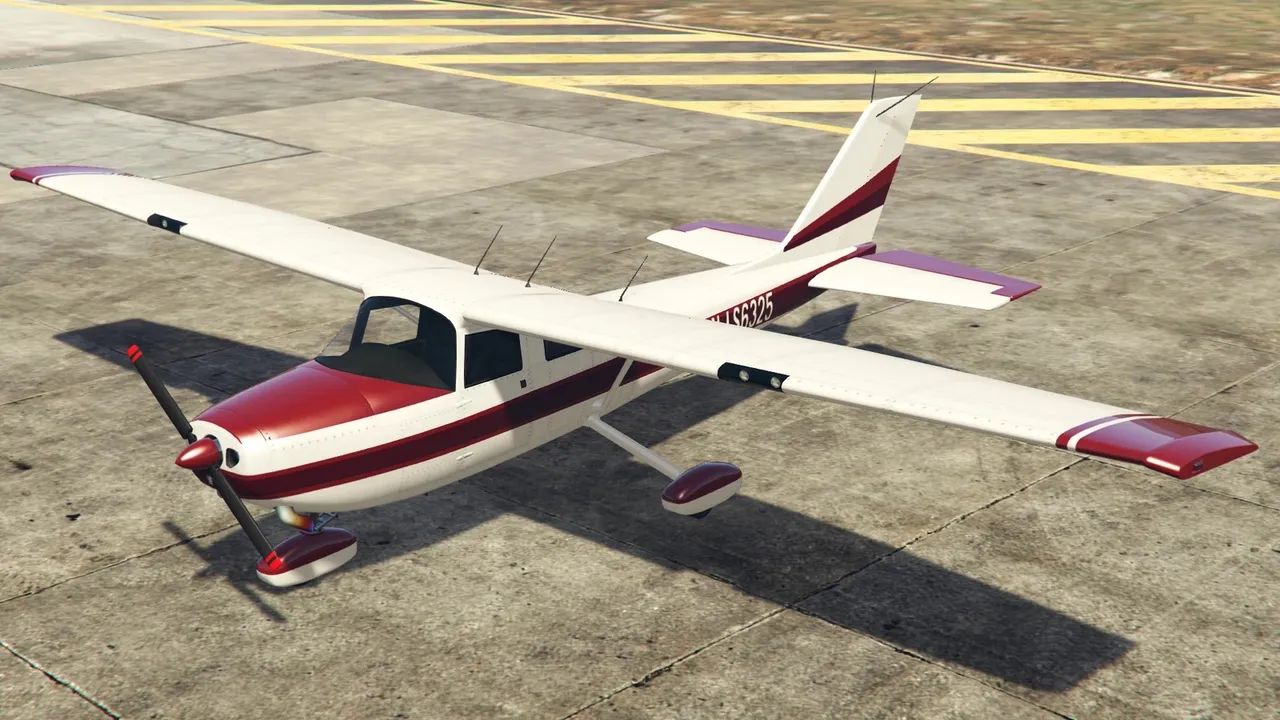
The Jobuilt Mammatus is a single-engine general-aviation airplane from Grand Theft Auto V and GTA Online that is due to appear in Grand Theft Auto VI, visible in artwork on the Leonida Keys section of the promotional website. Its design is inspired by various Cessna models, including the 172 Skyhawk, 177 Cardinal, and 182 Skylane.
GTA VI status
As of the latest official GTA VI trailers and promotional material catalogued here, Mammatus is documented primarily from earlier GTA titles or Online history rather than a confirmed close-up Leonida/Vice City showcase. Treat any return as unconfirmed until a trailer timestamp, map screenshot, or Rockstar caption clearly shows this vehicle.
The sections below keep the useful franchise background so you can compare design and role if it does reappear — not as a claim that it is already a GTA VI unlock or mission reward.
Online Purchase and Storage
In Grand Theft Auto Online, the Mammatus was sold by Elitás Travel for $300,000 and delivered as a Pegasus aircraft. In the enhanced edition, storing one in a Hangar placed it in the Medium aircraft category.
It could also be encountered at Los Santos International Airport’s cargo area. It sometimes appeared beside a Velum or Mallard near Franklin’s Hangar, and temporary examples were placed around the map during air-based Freemode Challenges. Those challenge aircraft were destroyed automatically after the event ended.
Los Santos and Sandy Spawns
In Grand Theft Auto V, Mammatus aircraft could be seen flying over Los Santos. They also sometimes arrived at Trevor’s airstrip or appeared by Michael’s hangar at Los Santos International Airport.
These appearances established it as a civilian light aircraft rather than a specialist military or stunt-plane type. Its older-game role included carrying four people despite the exterior having only two doors: once the front positions were filled, additional occupants were placed directly into the rear seats, as with the Velum.
Airframe and Exterior Features
The earlier-game Mammatus used a high-wing monoplane layout, with its wings attached above the cockpit. Its long body, small engine housing, two-blade propeller, nose-mounted pair of round taxi lamps, and wheel spats gave it a close visual relationship to the earlier 3D Universe Dodo.
Further round lamps sat on the wings and functioned like high beams. Small aerials were fitted above the cabin, behind the rear window, and on the vertical tail. The tail assembly used broad horizontal stabilizers. When the aircraft was airborne, its otherwise mostly hidden landing gear showed plain industrial-style wheels like those fitted to the Cuban 800 and Velum.
Cabin, Engine, and Handling
The cockpit initially shared much of its layout with the Maverick, including its instrument arrangement and control stick. Enhanced editions restored the interior with Flyer-style gauges and trim also used in the Maverick and other basic aircraft. The panel was broadly mirrored across both sides, although red switches occupied the left side.
A single piston engine powered the Mammatus. Its visible components combined textures apparently borrowed from V8 cam covers, an inline-four-style rocker cover, alternator parts, and batteries. Its engine audio was the conventional piston type heard on the Duster and Mallard.
Acceleration was strong, while maximum speed was low enough to leave it slower than the Duster. It needed little runway to leave the ground, but could lose height sharply after take-off. Landing was much easier: it could stop very quickly, and its stable, low-turbulence flight made it suited to inexperienced pilots.
Paintwork, Registrations, and Bug
Standard examples used white across the main fuselage. A second colour covered the propeller spinner, the upper nose, wheel spats, wing tips, elevators, and portions of the tail and side striping. The remaining side-stripe sections were tied to wheel colour instead, preventing those portions from being changed after conversion to a personal aircraft.
Personal Mammatus aircraft accepted primary and secondary paint colours and offered three registration-themed liveries. The tail number began with N-LS and ended in 4921, 6325, or 7823. Its taxi lights had a persistent fault: they remained illuminated even after the aircraft had been destroyed.
Vehicle data via GTA Wiki (Fandom), CC BY-SA 3.0.